The Famous Ones | Jonah
Table of Contents
- The Story of Jonah: Four Chapters, One Powerful Message
- Is the Story of Jonah Real?
- Jonah’s Rebellion: Why Did He Run?
- Jonah Was Blinded by His Own Pride
- The Fish Wasn’t God’s Judgment—It Was His Grace
- God Pursues Even the Most Rebellious People
- God Delights in Mercy; Man Delights in Judgment
- The Fruit of Submission to God
- You Are Jonah, and the Time Is Now
- Five Questions to Examine Your Heart
- A Call to Repentance and Surrender
The Story of Jonah: Four Chapters, One Powerful Message
Pastor Donnie began by walking through the four chapters of Jonah, summarizing the historical account before examining the lessons found throughout the story.
Jonah 1: Jonah Runs from God
God commands Jonah to travel to Nineveh, a great and wicked city, and proclaim a message of judgment.
Instead of obeying, Jonah travels in the opposite direction. He boards a ship heading toward Tarshish in an attempt to escape God’s command.
God sends a violent storm, and the sailors eventually discover that Jonah is responsible. Jonah tells them to throw him into the sea, and when they do, the storm immediately stops.
Jonah is then swallowed by a great fish, where he remains for three days and three nights.
Jonah 2: Jonah Prays from the Fish
From inside the fish, Jonah cries out to God.
He describes his distress and recognizes that the Lord has preserved his life.
God then causes the fish to release Jonah onto dry land.
Jonah 3: Jonah Goes to Nineveh
God speaks to Jonah a second time and again commands him to go to Nineveh.
This time, Jonah obeys.
He enters the city and proclaims that Nineveh will be destroyed in forty days.
The people believe Jonah’s message. The king calls the city to fast, mourn, and turn away from its evil ways and violence.
When God sees their repentance, He does not bring the announced destruction upon them.
But instead of rejoicing over the city’s repentance, Jonah becomes angry.
Jonah knew God was gracious and compassionate. He knew God might show mercy to Nineveh, and that was precisely what he didn’t want.
Jonah 4: Jonah Becomes Angry
Jonah leaves the city and waits to see what will happen.
God provides a plant to give Jonah shade, but then appoints a worm to destroy the plant and sends a scorching wind.
Jonah becomes furious over losing the plant.
In Jonah 4:5–11, God confronts Jonah about his anger and points out that Jonah is concerned about a plant he did not create or sustain, while God is concerned about the people of Nineveh.
The city contains more than 120,000 people, yet Jonah is more upset about losing his shade than he is concerned about their lives.
The book ends with God’s question hanging in the air, without recording Jonah’s response.
Is the Story of Jonah Real?
One of the questions Pastor Donnie addressed was whether the account of Jonah should be understood as literal history.
Many people struggle with the idea that someone could be swallowed by a large fish or whale and survive.
To address this question, Pastor Donnie shared examples of people who experienced encounters with whales.
Michael Packard’s Encounter with a Humpback Whale
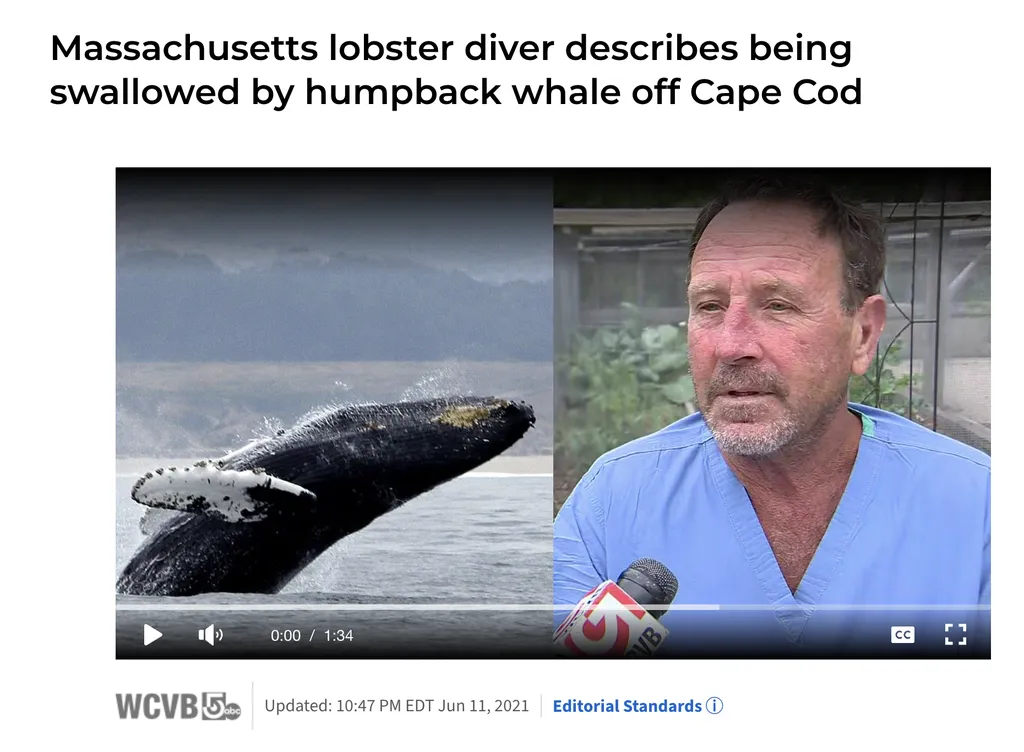
Pastor Donnie shared the story of Michael Packard, a Massachusetts lobster diver who was caught inside the mouth of a humpback whale off Cape Cod in June 2021.
Packard described being surrounded by darkness before the whale eventually released him. His experience was featured in a WCVB Channel 5 news report.
Another Whale Encounter Caught on Video
Pastor Donnie also showed footage of another whale encounter involving a young man named Adrián.
Jesus and the Sign of Jonah
After sharing these examples, Pastor Donnie turned the congregation’s attention to something more important: Jesus Himself referenced Jonah.
In Matthew 12:40–41, Jesus compares Jonah’s three days and three nights inside the great fish to His own death and resurrection.
Jesus also references the people of Nineveh and their repentance.
Pastor Donnie explained that Jesus acknowledged Jonah, Nineveh, and the repentance that took place there. He connected Jonah’s experience inside the fish to His own resurrection.
His challenge was that if Jesus treated the account of Jonah as literal, believers should take it seriously as well.
He also returned to Genesis 1:1, a passage discussed earlier in The Famous Ones series.
The opening words of Scripture establish that God existed before creation and created the heavens and the earth.
Pastor Donnie emphasized that if we accept God as the Creator, we can also accept that He has authority over His creation and can use animals to accomplish His purposes.
Jonah’s Rebellion: Why Did He Run?
After establishing the historical account, Pastor Donnie began examining Jonah’s character.
God called Jonah to Nineveh, but Jonah traveled in the opposite direction.
Jonah Travels in the Opposite Direction
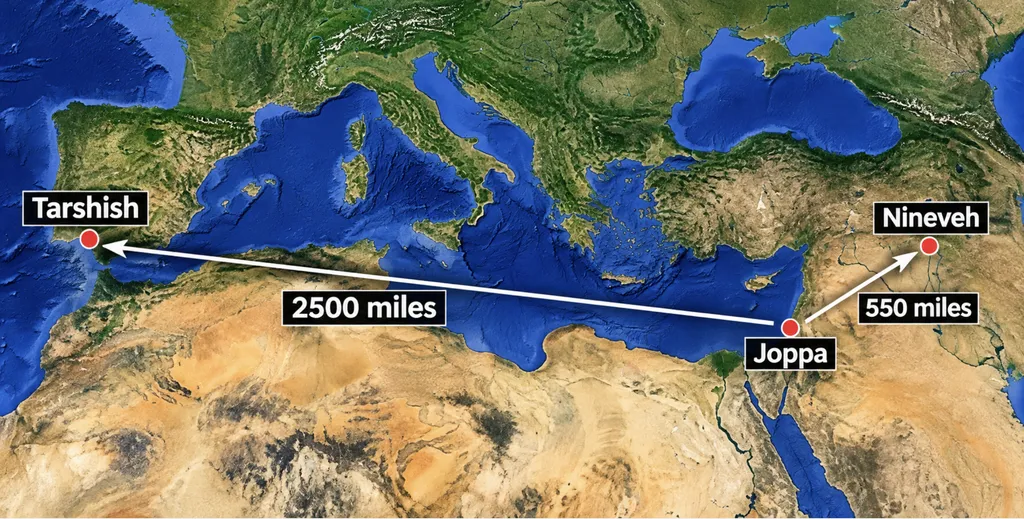
Rather than making the approximately 550-mile journey toward Nineveh, Jonah boarded a ship in Joppa heading toward Tarshish, approximately 2,500 miles in the opposite direction.
Pastor Donnie compared Jonah’s decision to other prophets who had struggled with their calling.
Moses expressed frustration and a desire to give up in Numbers 11. Jeremiah also struggled with his calling in Jeremiah 20.
But Pastor Donnie pointed out that Jonah actually followed through with his decision to run.
Severe Rebellion
It’s easy to assume that Jonah ran because he was afraid for his life.
Nineveh was a wicked city, and the mission God gave Jonah was dangerous.
But Pastor Donnie challenged that interpretation.
Throughout the story, Jonah repeatedly expresses a willingness to die.
His primary motivation wasn’t necessarily preserving his own life.
Jonah hated the people God wanted to redeem.
He knew that God was merciful and would forgive Nineveh if its people turned away from their sins.
But Jonah wanted his enemies to be destroyed.
Rather than wanting them to experience God’s forgiveness, Jonah wanted them to receive judgment.
Pastor Donnie explained that Jonah was attempting to take God’s place by determining who deserved redemption and who deserved eternal punishment.
Jonah Was Blinded by His Own Pride
Another major flaw in Jonah’s life was his pride.
Jonah looked at the people of Nineveh and condemned them for their wickedness and rebellion against God.
Yet Jonah himself was rebelling against God by refusing to obey His command.
Pastor Donnie pointed out the irony.
Jonah was essentially condemning Nineveh’s rebellion while acting as though his own rebellion was more righteous.
He was so blinded by pride that he couldn’t recognize the sin in his own heart.
Jonah wanted to sit in judgment over people whom God wanted to redeem.
Why Did Jonah Ask to Be Thrown into the Sea?
Pastor Donnie also discussed Jonah’s decision to tell the sailors to throw him overboard.
He explained that biblical scholars have debated Jonah’s motivation.
One interpretation is that Jonah was taking responsibility for the sailors’ safety by offering his own life.
Another interpretation is that Jonah would have preferred death over obeying God’s command to preach to a city he despised.
Either way, the account demonstrates the seriousness of Jonah’s rebellion and his unwillingness to follow God’s calling.
The Fish Wasn’t God’s Judgment—It Was His Grace
One of the central points of Pastor Donnie’s message challenged the way we typically understand the great fish.
Many people view the fish as God’s punishment for Jonah’s disobedience.
But Pastor Donnie presented a different perspective.
The fish isn’t God’s judgment. It’s God’s grace.
When Jonah was thrown into the sea, the fish preserved his life.
Inside the fish, Jonah cried out to God and experienced a moment of surrender.
The very thing that appeared to be swallowing Jonah became the place where he encountered God.
Pastor Donnie pointed out that the sailors obeyed, and the fish obeyed God’s direction, but Jonah continued resisting.
It was inside the fish that Jonah finally submitted.
What Happens Inside the Fish?
Pastor Donnie challenged the congregation to consider the purpose of Jonah’s experience.
We often focus on what Jonah physically experienced inside the fish.
But the more important question is what happened inside Jonah’s heart.
Jonah stopped fighting against God’s direction.
He surrendered.
If the fish had been God’s final judgment against Jonah, his story would have ended there.
Instead, God used the fish to preserve Jonah’s life and bring him back toward the mission he had abandoned.
God still wanted to use Jonah, and God still wanted to reach Nineveh.
When God’s Grace Is Hidden in Plain Sight
Pastor Donnie then applied this truth to the difficult situations people experience in their own lives.
He asked the congregation to consider whether something that feels overwhelming, impossible, or like God’s judgment might actually be an expression of His grace.
What if the very thing that seems to be swallowing you up is the place God uses to bring you into an encounter with Him?
What if God is using that situation to bring you where He ultimately desires you to be?
That was the challenge Pastor Donnie presented through Jonah’s experience inside the fish.
God Pursues Even the Most Rebellious People
Why would God go through so much trouble to bring Jonah to Nineveh?
Why preserve a rebellious prophet and continue pursuing a wicked city?
Pastor Donnie answered with another central point:
God loves and pursues even the most rebellious people.
Despite Jonah’s disobedience, God continued working in his life.
Despite Nineveh’s wickedness, God wanted its people to repent and turn toward Him.
Pastor Donnie reminded the congregation that God pursues humanity continually.
He encouraged believers to look back over their lives and recognize the ways God was working even before they personally came to know Jesus.
God’s pursuit wasn’t limited to Jonah.
And it wasn’t limited to Nineveh.
The question Pastor Donnie presented was whether people would recognize God’s pursuit, turn toward Him, choose Him, and follow Him.
God Delights in Mercy; Man Delights in Judgment
When the people of Nineveh repented, Jonah should have been celebrating.
An entire city had responded to God’s warning.
Instead, Jonah remained angry.
He sat outside the city waiting to see whether judgment would come.
Pastor Donnie described Jonah as waiting for God’s judgment to fall upon the people.
Then, when the plant providing his shade died, Jonah became even more upset.
God confronted Jonah over the difference between his concern for the plant and God’s concern for the people of Nineveh.
Jonah was more upset about losing his personal comfort than he was concerned about the lives of 120,000 people.
God’s Heart Toward Nineveh
Pastor Donnie summarized this contrast with a powerful statement:
God delights in mercy; man delights in judgment.
God wanted the people of Nineveh to turn away from their wickedness.
Jonah wanted them to experience the consequences of their rebellion.
God was concerned about their lives.
Jonah was concerned about his comfort.
Through this contrast, Pastor Donnie challenged the congregation to consider whether their hearts reflect God’s concern for people who need redemption.
He asked whether Jonah’s personal comfort had become more important to him than the souls of others.
That same question would return at the conclusion of the message.
The Fruit of Submission to God
Pastor Donnie also highlighted what happens when someone submits to God.
Through Jonah’s experience, he identified four results of surrender.
1. The Lord Meets Us Where We Are — Jonah 1:17
God met Jonah in the middle of his rebellion and provided what he needed.
Pastor Donnie described this as divine provision.
When we submit to God, He can provide in ways that people and material resources cannot.
2. We See Others Come to Faith — Jonah 1:13–16
Submission to God isn’t only about our own lives.
God works through people to reach others.
Pastor Donnie emphasized that obedience and surrender have an impact beyond the individual.
3. Our Worship and Prayer Grow — Jonah 2:1–9
Jonah’s prayer inside the fish demonstrates how an encounter with God can transform someone’s worship.
Pastor Donnie explained that experiencing God’s presence and recognizing His hand at work can bring a deeper understanding of praise and prayer.
4. We Partner with God — Jonah 3:1–9
When Jonah finally obeyed, he participated in the work God wanted to accomplish in Nineveh.
Pastor Donnie described partnering with God as working with Him and allowing Him to work in and through our lives.
These four results demonstrated the importance of submission throughout Jonah’s story.
You Are Jonah, and the Time Is Now
As Pastor Donnie approached the conclusion of his message, he turned the congregation’s attention toward the urgency of sharing the Gospel.
Jonah had been given a message for a city that needed to repent.
But he resisted delivering that message because he didn’t believe the people deserved God’s mercy.
Pastor Donnie connected Jonah’s responsibility to the responsibility of Christians today.
Believers have been entrusted with the message of salvation through Jesus Christ.
And that message is meant to be shared.
The Urgency of Christ’s Return
Pastor Donnie discussed biblical prophecy and his belief that current world events point toward the approaching return of Jesus Christ.
He referenced the Euphrates River, the relationship between the nations and Israel, persecution of Christians, and biblical warnings concerning morality and the last days.
Among the passages he discussed were Revelation 16, John 16:2, Revelation 20:4, 2 Timothy 3, and 2 Peter 3.
He urged the congregation to recognize what he believes are signs of biblical prophecy being fulfilled and to understand the urgency of reaching people with the Gospel.
His central challenge was clear:
You are Jonah, and the time is now.
Just as Jonah was given a message for Nineveh, Christians have been given the Gospel.
Pastor Donnie challenged the congregation not to withhold that message from the people around them.
Five Questions to Examine Your Heart
Pastor Donnie concluded by asking the congregation to consider how they might be like Jonah.
He presented five questions intended to expose attitudes that can keep believers from reflecting God’s heart toward others.
1. Do I Delight More in Judgment Than Mercy?
Pastor Donnie asked whether there are groups of people whose redemption would offend us.
If someone we strongly disagree with came to know Jesus tomorrow, would we celebrate?
Or would we be more excited to hear about bad things happening to people we believe deserve punishment?
Jonah’s anger over Nineveh’s repentance revealed that he preferred judgment over mercy.
2. Am I Withholding Forgiveness from Someone?
Pastor Donnie challenged the congregation to consider whether someone’s past actions have caused them to refuse to extend forgiveness or minister to that person.
Jonah knew about Nineveh’s wickedness, and that knowledge contributed to his refusal to deliver God’s message.
The question was whether we allow someone’s past to keep us from responding to them as God has called us to.
3. Are There People I’m Withholding the Gospel From?
Every day brings opportunities to speak with people around us.
Pastor Donnie reminded the congregation that thousands of conversations are waiting to happen.
Some of those conversations are opportunities to reach people with the Gospel.
His challenge was simple: Are we having them?
4. What Upsets Me More Than Lost People?
Pastor Donnie challenged the congregation to examine what receives their greatest emotional attention.
He used the example of people becoming more upset about the outcome of a sports game than about people who are on a path toward eternal separation from God.
Through Jonah’s reaction to the plant, Pastor Donnie emphasized the danger of becoming more concerned about temporary frustrations than the spiritual condition of others.
5. Is My Comfort More Important Than People’s Souls?
Finally, Pastor Donnie returned to the central issue revealed in Jonah 4.
Jonah was upset because his shade had disappeared.
But he wasn’t showing the same concern for the people of Nineveh.
Pastor Donnie connected this attitude to the way Christians sometimes respond to changes in American culture.
He challenged the congregation to consider whether their frustration comes primarily from the interruption of their comfortable lifestyle or from concern about the spiritual direction of people who need Jesus.
The question was whether personal comfort has become more important than reaching people with the Gospel.
A Call to Repentance and Surrender
After presenting these questions, Pastor Donnie reminded the congregation that repentance and surrender lead to the fruit of submission.
Jonah’s turning point came inside the fish.
It was there that he cried out to God and submitted to His direction.
Pastor Donnie invited the congregation to approach God with that same attitude.
Before attempting to deliver God’s message to the world, he challenged everyone to examine their own hearts.
He encouraged the church to make that moment of worship and response a place of surrender, just as Jonah had cried out to God from inside the fish.
Through repentance, believers can turn away from pride, rebellion, and attitudes that prevent them from obeying God’s calling.
And through submission, they can experience God’s provision, grow in worship and prayer, see others come to faith, and partner with Him in reaching people.
Final Thoughts: Another Day in Nineveh
Jonah’s story reveals a prophet who was willing to receive God’s mercy but struggled to celebrate that same mercy being extended to others.
He knew God’s character.
He knew what God had called him to do.
Yet his rebellion and pride kept him from sharing God’s heart for Nineveh.
Through this message, Pastor Donnie challenged the congregation to recognize God’s pursuit, surrender their pride, and consider the people around them who need to hear the Gospel.
The same God who pursued Jonah also wanted to reach Nineveh.
And the message Pastor Donnie left with the church was one of urgency.
We have been given a message that can save.
The time is now.

About Harvest Church
Harvest Church is an Assemblies of God church located in Fogelsville, Pennsylvania, in the Lehigh Valley. We are currently going through a sermon series called The Famous Ones, a study of well-known figures in the Bible, their relationship with God, and how their stories apply to our lives today. You can explore the rest of the series on our website or listen on your favorite podcast platform.