The Famous Ones | Shadrach, Meshach, and Abednego
Through their story, Pastor Donnie challenged the church to place our faith in God’s ability rather than our desired results, surrender to His will, and remember that the outcome of our circumstances does not define our relationship with Him.
He also reminded us that God doesn’t always prevent us from the fire, but He always stands with us in it.
Table of Contents
- The Story of Shadrach, Meshach, and Abednego
- Acknowledging God vs. Surrendering to Him
- Standing Firm When Everyone Else Bows
- Three Charges Against the Hebrew Men
- A Foundation That Can Withstand Pressure
- Four Lessons of Faith from Daniel 3
- Faith in God’s Ability, Not the Desired Result
- God’s Will Is Greater Than Our Wishes
- The Results Do Not Define Our Relationship With God
- God Is With Us in the Fire
- The Greatest Weapon We Have Is the Gospel
- Faith in Christ Should Move Us to Share Christ
- Questions to Examine Our Faith
- Final Thoughts: Faith in the Fire
The Story of Shadrach, Meshach, and Abednego
Pastor Donnie began by establishing the historical context surrounding Daniel 3.
Shadrach, Meshach, and Abednego were young Hebrew men who had been taken into captivity in Babylon. They were living in a nation surrounded by pagan worship, false gods, and practices that directly conflicted with the commandments of the Lord.
Despite the environment around them, these men remained committed to the God of Israel.
Daniel 1: A Foundation of Faith
In Daniel 1, we are introduced to Daniel and his three companions after they are brought into Babylonian captivity.
They were young men, approximately fifteen years old, who had been raised with a knowledge of God and His commandments.
Although they were removed from their homeland and immersed in Babylonian culture, they continued to hold to the principles they had learned.
Daniel 2: Nebuchadnezzar Acknowledges God
In Daniel 2, King Nebuchadnezzar has a troubling dream and demands that his wise men tell him both the dream and its interpretation.
Daniel receives revelation from God and is able to explain the dream to the king.
As a result, Nebuchadnezzar acknowledges the greatness of Daniel’s God.
But acknowledging the power of God is not the same as surrendering your life to Him.
Daniel 3: The Golden Statue and the Fiery Furnace
Nebuchadnezzar builds a massive golden statue and commands the people to bow down and worship it whenever they hear the sound of the music.
Anyone who refuses will be thrown into a blazing furnace.
Shadrach, Meshach, and Abednego refuse to bow, and their obedience to God places them in direct conflict with the king.
Their refusal leads to one of the most recognizable accounts of faith in Scripture.
Acknowledging God vs. Surrendering to Him
One of the important distinctions Pastor Donnie made was the difference between acknowledging God and surrendering to Him.
Nebuchadnezzar had already witnessed the power of God through Daniel’s interpretation of his dream.
He recognized that Daniel’s God was powerful, but his actions in Daniel 3 revealed that he had not truly surrendered to the Lord.
There is a difference between acknowledging God in a moment and surrendering to Him for a lifetime.
People can recognize that God exists, believe that He is powerful, and even acknowledge something miraculous He has done without allowing Him to become Lord over their lives.
True surrender requires obedience.
Standing Firm When Everyone Else Bows
Nebuchadnezzar gathered people from across his kingdom to worship the golden image.
When the music sounded, the people bowed down before the statue.
Pastor Donnie described an enormous gathering of people, with only three men refusing to bow.
Imagine standing in a crowd where everyone around you is kneeling, knowing that your refusal could cost you your life.
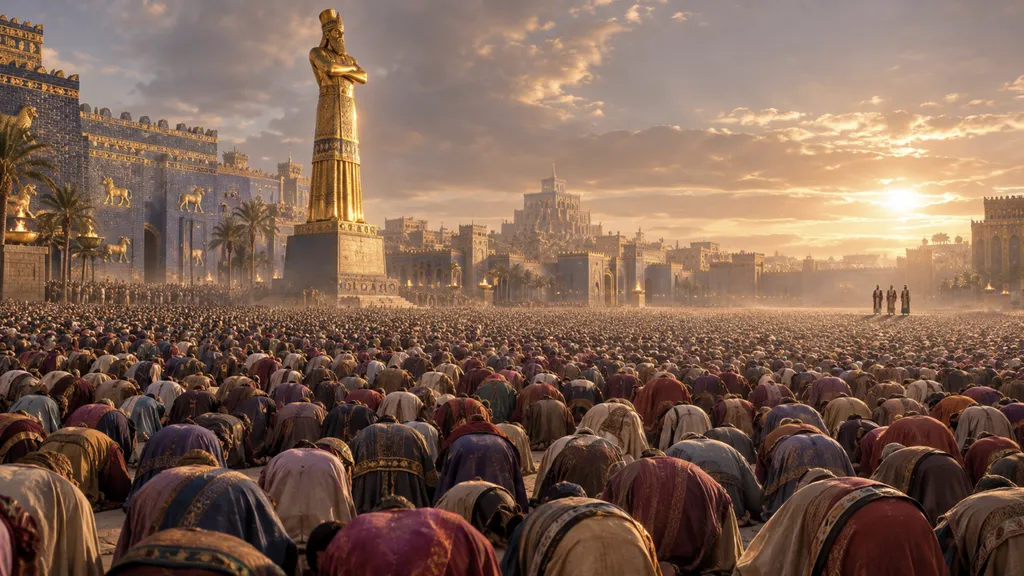
They understood what God’s Word commanded, and they knew that bowing before the statue would violate their obedience to Him.
In Daniel 3:16–18, the men declare that God is able to deliver them from the furnace, but even if He does not, they will not serve the king’s gods or worship the golden image.
Their confidence was not based on knowing how the situation would end.
They were committed to obeying God regardless of the consequences.
Three Charges Against the Hebrew Men
Pastor Donnie identified three charges brought against Shadrach, Meshach, and Abednego.
1. They Paid No Heed to the King
Nebuchadnezzar was the governing authority of Babylon, and his command was clear.
But the three men understood that the king’s command directly conflicted with the commandments of God.
They recognized that God’s authority was greater than the authority of any earthly ruler.
Pastor Donnie explained that believers are generally called to respect governing authorities, but when the law of man directly contradicts the law of God, obedience to God must take priority.
He connected this principle to examples such as the Hebrew midwives in Exodus 1 and the apostles in Acts 4.
2. They Did Not Serve the King’s Gods
These men refused to participate in the worship of false gods.
They had been living in Babylon for years, surrounded by a culture that worshiped many different gods.
Yet their time in that environment had not changed their commitment to the Lord.
They knew whom they served, and they refused to compromise.
3. They Refused to Worship the Golden Statue
The final charge was their refusal to bow before the golden image.
They were unwilling to violate God’s commandments, even when threatened with death.
The choice placed before them was simple: bow or burn.
But they had already made their decision.
Their obedience was not conditional upon their safety.
A Foundation That Can Withstand Pressure
Pastor Donnie emphasized that Shadrach, Meshach, and Abednego did not suddenly develop their faith when they stood before Nebuchadnezzar.
They had entered Babylonian captivity with a foundation of God’s Word already established in their lives.
Although they had spent years surrounded by a culture of false worship, they continued to recognize the difference between what God commanded and what the world expected.
They knew God’s Word well enough to understand that the king’s command was not something they could obey.
Teaching the Next Generation to Stand Firm
Pastor Donnie challenged parents and families to consider the spiritual foundation being established in their children.
We cannot expect children to develop a strong biblical foundation simply by attending church on Sunday mornings.
Faith must be taught, demonstrated, and strengthened throughout everyday life.
Children need more than a general understanding of right and wrong. They need to know God’s Word and understand why obedience to Him matters.
When pressure comes, that foundation helps them recognize what is true and remain faithful to the Lord.
Four Lessons of Faith from Daniel 3
Through the response of Shadrach, Meshach, and Abednego, Pastor Donnie presented important lessons about genuine faith.
Faith is trust, confidence, and firm reliance upon God.
It is not simply believing that God will produce the outcome we want. It is trusting His ability, His will, and His character regardless of what happens.
1. Faith Should Be in God’s Ability, Not the Desired Result
When the three men stood before Nebuchadnezzar, they declared that the God they served was able to deliver them from the fiery furnace.
They did not say that God was obligated to deliver them.
They believed in His ability while remaining surrendered to whatever He allowed to happen.
Pastor Donnie explained that sometimes believers place their faith in a specific outcome rather than in God Himself.
We may pray for something, confess that it will happen, and begin to believe that genuine faith means God must respond exactly as we expect.
But faith should not be placed in the desired result.
Our faith must be in the One who has the ability to accomplish all things.
Philippians 4:6 encourages believers to bring their requests before God, while James 1:6 teaches us to ask in faith.
We can pray specifically and confidently while recognizing that God is sovereign over the outcome.
True Faith Is Unconditional
Shadrach, Meshach, and Abednego demonstrated unconditional faith.
They knew God was able to save them, but even if He did not, their commitment to Him would not change.
They were not serving God because of what He might do for them.
They were serving Him because He was God.
True faith is unconditional.
No matter the outcome, we can continue to trust in God’s ways and remain faithful to Him.
2. God Does Not Work According to Our Wish, but According to His Will
Another lesson Pastor Donnie emphasized was the sovereignty of God.
God does not work according to our wishes, but according to His will.
His will is perfect. His will is always on time. But His will might not be the same as ours.
There are times when we pray for something and genuinely believe it would be best, yet God has a different plan.
That does not mean God has failed us.
It means His wisdom and understanding are greater than our own.
Following the Example of Jesus
Pastor Donnie pointed to Jesus in the Garden of Gethsemane.
Before His crucifixion, Jesus expressed His desire for the cup of suffering to pass from Him, yet surrendered to the Father’s will.
Jesus demonstrated that surrendering to God’s will is not a lack of faith.
It is an expression of trust in the Father.
1 John 5:14 reminds us that we can approach God with confidence when we ask according to His will.
Our prayers should be rooted in confidence in God’s ability and submission to His perfect plan.
3. The Results Do Not Define Our Relationship With God
The three men were faithful to God, yet they were still thrown into the furnace.
Their obedience did not prevent them from experiencing the consequences of refusing the king’s command.
Pastor Donnie reminded the church that the results of our circumstances do not define our relationship with God.
Sometimes people experience difficulty and begin to question whether God is disappointed with them or whether their faith is insufficient.
But an unwanted outcome does not necessarily mean that God has abandoned us or that we have failed Him.
Shadrach, Meshach, and Abednego remained faithful before the furnace, inside the furnace, and after God delivered them.
Their relationship with God was not determined by the outcome.
If God does not respond in the way we hoped, He is still God.
4. God Doesn’t Always Prevent Us from the Fire, but He Stands With Us in It
After the three men were thrown into the furnace, Nebuchadnezzar looked inside and was astonished by what he saw.
Instead of three men bound and burning, he saw four figures walking freely through the flames.
The fire had not consumed them.
And they were not alone.
Pastor Donnie shared his belief that the fourth figure was a pre-incarnate appearance of Jesus Christ, while acknowledging that others interpret the figure as an angel.
The important reminder is that God was present with these men in the middle of their trial.
The Miracle Is in the Fire
God did not prevent Shadrach, Meshach, and Abednego from being thrown into the furnace.
Instead, He demonstrated His power while they were in it.
Pastor Donnie challenged the congregation to consider what would have happened if God had prevented the fire altogether.
Nebuchadnezzar would not have witnessed the same extraordinary miracle.
The king would not have seen four figures walking unharmed through the flames.
The fire became the setting for God’s power to be revealed.
The miracle was in the fire.
Sometimes we ask God to remove difficult circumstances from our lives, but He may use those very circumstances to deepen our faith and demonstrate His presence.
Our greatest testimonies often develop through the most difficult seasons.
God doesn’t always prevent us from the fire, but He always stands with us in it.
Growing Through Difficult Seasons
Romans 5:3–5 teaches that suffering can produce perseverance, character, and hope.
Pastor Donnie reminded the church that challenges and difficulties can become opportunities for spiritual growth.
We may not always understand why God allows certain circumstances, but we can trust that He remains faithful.
Sometimes the greatest miracle is not that God removes the trial, but that He sustains us through it.
The Greatest Weapon We Have Is the Gospel
As Pastor Donnie approached the conclusion of the message, he addressed the spiritual challenges facing our nation and the world.
He reminded the church that the problems we see around us are not ultimately solved through political power alone.
The greatest weapon believers have is the Gospel of Jesus Christ.
Scripture reminds us that the battle is spiritual. The transformation our world needs begins with the transformation of human hearts.
Pastor Donnie explained that legislation can restrain evil, but only the Gospel can transform the heart.
When a person genuinely encounters Jesus Christ and repents of sin, their desires, priorities, and direction begin to change.
Someone who once lived in rebellion against God can become someone who desires to follow His commandments.
That is the transforming power of the Gospel.
Faith in Christ Should Move Us to Share Christ
Pastor Donnie challenged believers not to allow fear, frustration, or the circumstances of the world to distract them from the mission Jesus has given the Church.
Our responsibility is to share the Gospel and make disciples.
The greatest victory for a believer is seeing people come to salvation through Jesus Christ.
We are surrounded by people who need to hear the message of hope and redemption.
Sometimes sharing Christ begins with a simple conversation.
It may mean inviting a neighbor into our home, building a relationship with someone, sharing our testimony, or taking an opportunity to explain what Jesus has done in our lives.
Pastor Donnie reminded the congregation that faith in Christ should move us to share Christ.
Our Mission Field Begins Outside the Church Doors
At the conclusion of the service, Pastor Donnie reminded the church that walking through the doors of the building does not mean leaving the Church’s mission behind.
Those doors lead into our mission field.
Our neighborhoods, workplaces, schools, families, and communities are filled with opportunities to make Jesus known.
The mission of the Church continues throughout the week, not just during Sunday services.
Questions to Examine Our Faith
The story of Shadrach, Meshach, and Abednego challenges us to consider the foundation of our faith and how we respond when that faith is tested.
1. Is My Faith in God’s Ability or in a Specific Outcome?
Do I trust God because I believe He will give me what I want, or because I know He is faithful regardless of what happens?
2. Am I Willing to Surrender My Desires to God’s Will?
When God’s plan looks different from my own, will I continue to trust Him?
3. Do Difficult Circumstances Change My Relationship With God?
When I experience disappointment or hardship, do I begin to question God’s faithfulness, or do I remain committed to Him?
4. Am I Standing Firm on God’s Word?
Have I developed a strong enough biblical foundation to recognize when the expectations of the world conflict with God’s commandments?
5. Am I Sharing the Gospel With the People Around Me?
Does my faith move me to reach others with the message of Jesus Christ?
Final Thoughts: Faith in the Fire
Shadrach, Meshach, and Abednego stood before Nebuchadnezzar with a confidence that was not dependent upon their circumstances.
They knew God was able to deliver them.
They also knew that even if He did not, He was still worthy of their obedience.
Through their example, Pastor Donnie challenged the church to develop unconditional faith, surrender to God’s perfect will, and recognize that our relationship with Him is not defined by the results we experience.
God doesn’t always prevent us from the fire, but He always stands with us in it.
And as we walk through the doors of the church and into our communities, we are called to carry the Gospel of Jesus Christ with us.
May we stand firm in God’s Word, trust in His will, and boldly share the message of salvation with the world around us.

About Harvest Church
Harvest Church is an Assemblies of God church located in Fogelsville, Pennsylvania, in the Lehigh Valley. We are currently going through a sermon series called The Famous Ones, a study of well-known figures in the Bible, their relationship with God, and how their stories apply to our lives today. You can explore the rest of the series on our website or listen on your favorite podcast platform.